
There is no
creature with you yet
Every Nomokoke is unique: when you find yours, it will be yours alone.
See available pieces 
Warm or cool light, LED or incandescent, which wattage to choose and how the glaze changes the light: a simple guide to picking the bulb for a ceramic lamp.
You can own the prettiest ceramic lamp in the world and spoil it with the wrong bulb. The bulb decides the colour of the light, the mood of the room and even how the glaze looks. Here is a simple guide to choosing well, without jargon.
The colour of light is measured in kelvin (K). You only need to remember two ideas: a low number gives a yellowish, cosy light, and a high number gives a white, bluish light.
For a bedside, shelf or living-room lamp, always choose a warm light, 2700 K or lower. The packaging usually says “luz cálida” or “warm white”.
Classic incandescent bulbs give a very pleasant light, but they use a lot of power, get hot and are hardly made any more. Today the most practical choice is a LED bulb with warm light:
If you like the look of old-fashioned bulbs, there are filament LEDs, with the filament on show. They give a warm light and a retro feel, and go very well with a handmade piece.
A mood lamp does not need much light. An LED of between 4 and 8 watts is enough, equivalent to an incandescent of about 40 to 60 watts. Always check the maximum wattage your lamp indicates and do not exceed it.
If you want to read with it, look for a bulb with more lumens. If you just want a calm atmosphere, a softer one will be nicer. And if you like adjusting the light to the moment, there are dimmable LEDs, as long as the lamp and the dimmer allow it.
Before buying, look at the socket, the thread where the bulb screws in. The most common ones at home are the E27, the thick one, and the E14, the thin one. If you look at the bulb it has now, the type is normally printed on the base.
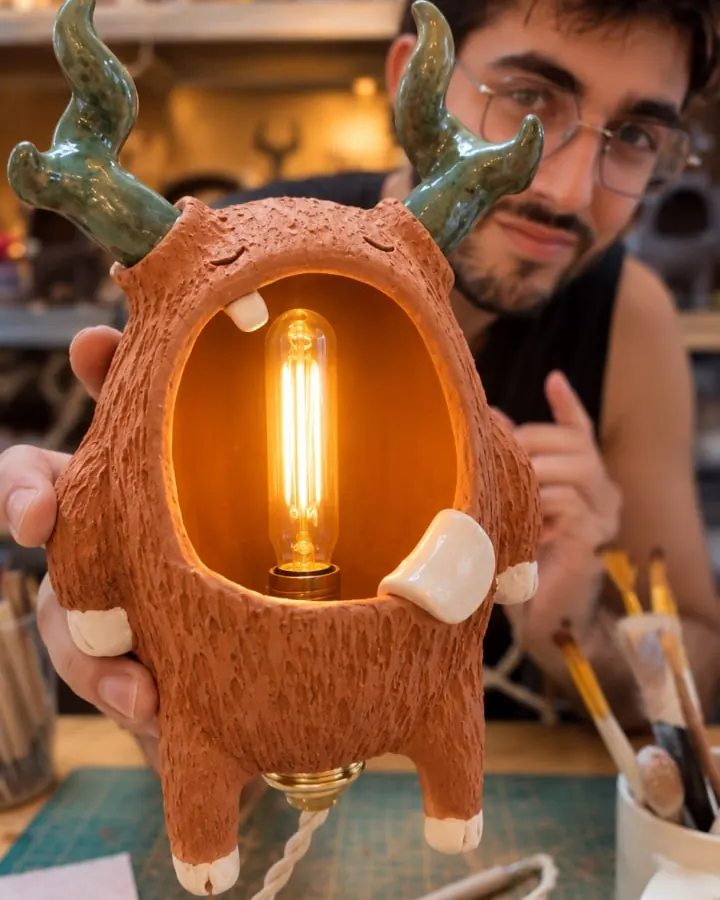
The same bulb does not look the same in every piece. Dark clay or an intense glaze absorbs part of the light and gives a more intimate result. A light or glossy glaze reflects it and looks brighter. In a creature with an open mouth, like the Nomokoke ones, the light comes out of the opening and tints the clay inside orange, so a warm light is almost a must.
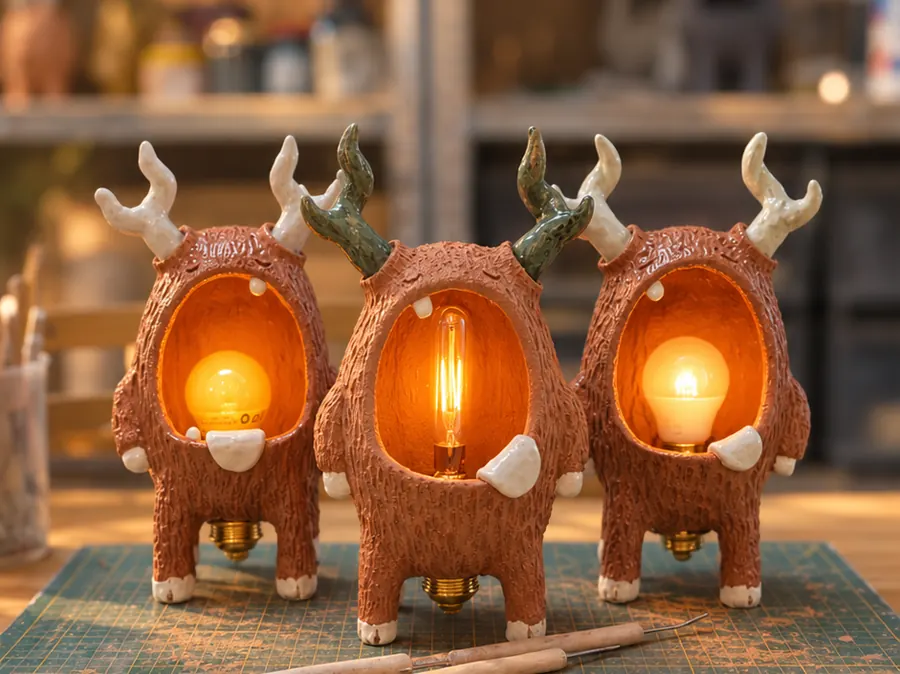
A warm lamp works best at a low height and away from the ceiling light. On a bedside table, a shelf or in a reading corner it creates the atmosphere you are after. If you want more ideas, I share them in how to decorate with a ceramic lamp.
If you are still choosing a lamp, see what to look at before choosing a handmade ceramic lamp. You can see the pieces that have already found a home in the burrow, and if you want to hear about the next batch before anyone else, leave me your email in the next-drop notice.
And be the first to know when the next batch comes out.

Handprints, glaze, base, weight and small imperfections: six signs to tell a handmade ceramic piece from an industrial one before you buy.
Bedside table, shelf, desk or entrance hall: seven simple ideas for decorating with a handmade ceramic lamp and making the most of its warm light.
Leave me your email and I'll let you know as soon as I have a date for the next drop, so you can come to the shop and adopt yours.