
There is no
creature with you yet
Every Nomokoke is unique: when you find yours, it will be yours alone.
See available pieces 
Handprints, glaze, base, weight and small imperfections: six signs to tell a handmade ceramic piece from an industrial one before you buy.
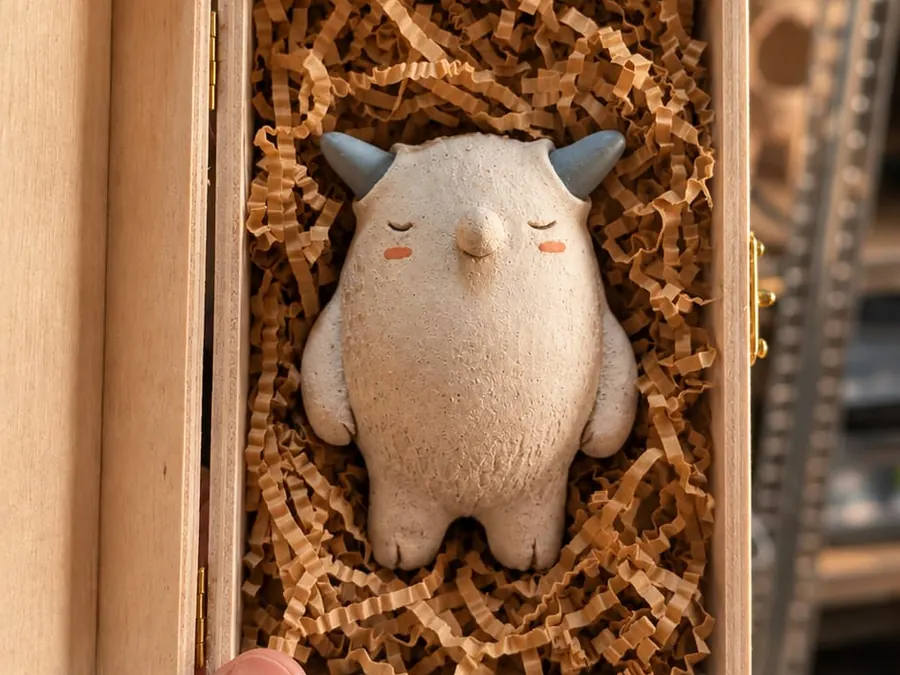
Two vases can look alike in a photo and feel very different in the hand. The difference between handmade ceramics and industrial ceramics is not only the price: it is in how they are made, and you can tell in the object. Here are six simple signs to tell them apart before you buy.
Industrial ceramics are made with moulds and aim for every piece to come out identical. Handmade pieces are modelled one by one, so there are always small differences in shape, proportion and gesture. If two pieces from the same series are indistinguishable, they probably came from the same mould.
A perfectly smooth, uniform surface usually points to an industrial process. On a handmade piece you may find small marks from fingers, tools or smoothing. They are not flaws: they are the signature of the process.
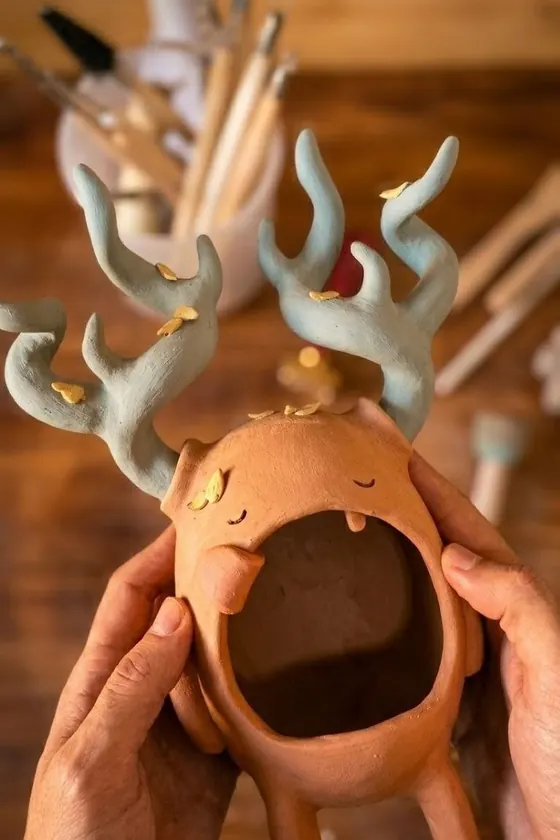
On an industrial piece the glaze is applied evenly and the colour is always the same. On a handmade one the glaze is applied by hand and, once fired, it can vary in tone, thickness and shine from one area to another. Those variations give depth to the piece and make the light play differently on it.
The base says a lot. On industrial ceramics it is usually regular and carries manufacturing marks; on handmade ceramics it may be left unglazed, show the clay and have slight irregularities. Turning the piece over and looking underneath is one of the best tests.
A handmade piece usually has a different weight depending on how it was modelled, and its balance depends on each shape. What matters is that it is stable. If it is a lamp, check it: I explain it in more detail in what to look at before choosing a handmade ceramic lamp.
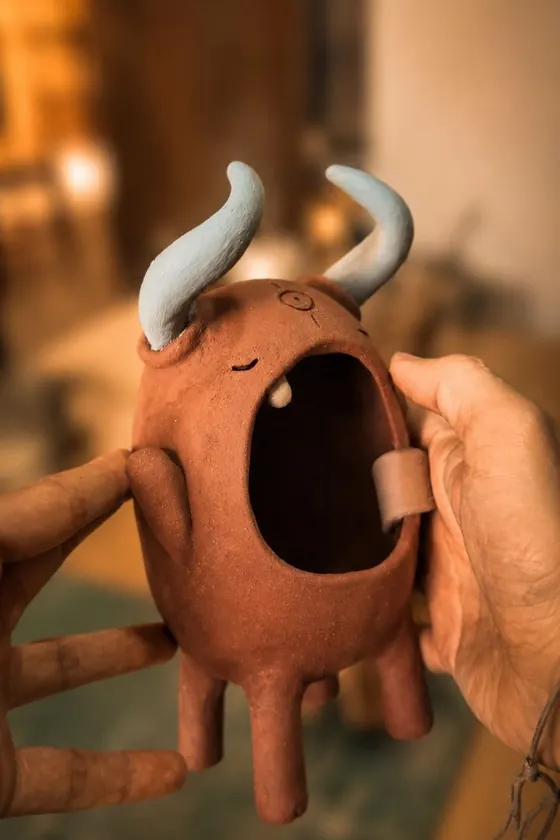
A good workshop can tell you the process: the clay, the drying time, the firings and the glaze. If there is a name and a story behind it, that is a good sign. At Nomokoke, for example, every creature is modelled by hand, dried, goes through a first firing, is glazed and goes back into the kiln a second time. I explain it step by step in how a ceramic creature is made by hand.
Not necessarily: industrial ceramics are practical, affordable and perfectly valid for everyday use. Handmade offers something else: one-of-a-kind pieces with character and a story. The choice depends on what you are looking for, an everyday object or a piece to look at and keep.
If you are interested in the latter, you can see the pieces that have already found a home in the burrow. And if you want to hear about the next batch before anyone else, leave me your email in the next drop notice.
And be the first to know when the next batch comes out.
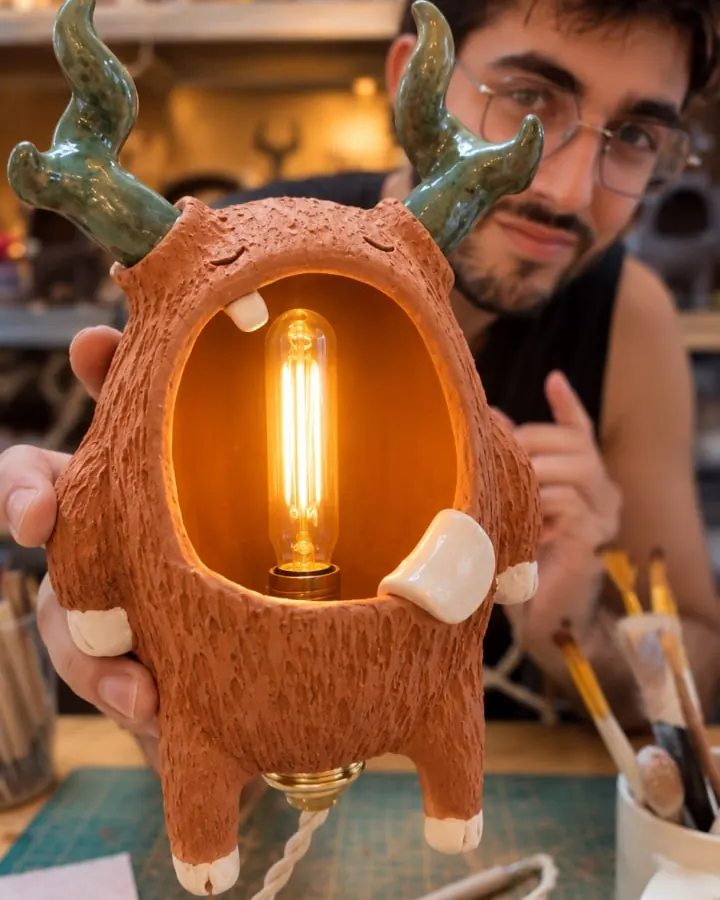
Warm or cool light, LED or incandescent, which wattage to choose and how the glaze changes the light: a simple guide to picking the bulb for a…
Bedside table, shelf, desk or entrance hall: seven simple ideas for decorating with a handmade ceramic lamp and making the most of its warm light.
Leave me your email and I'll let you know as soon as I have a date for the next drop, so you can come to the shop and adopt yours.